The Monks Market: the goods, services and writings of Benedictine monks
Ora et labora—that famous Benedictine motto—speaks not just to the spiritual work of monks, but also the practical labor they engage in. A monk’s prayer life is to be complimented by physical work. And in many case the fruits of those labors are enjoyed beyond the monastery, in the form of goods, services and even writings.
In The Rule, St. Benedict writes that a monk should live by the labor of his own hands, avoiding a dependence on outsiders. And perhaps most importantly, he teaches that all work should be conducted with humility and honesty. By offering goods and services, monks are able to better support themselves financially and even fund charitable outreach.
Profit is never the motive. Monks’ works are guided by stability, stewardship and sustainability.
Producing goods on the monastery grounds
The Trappists are known for beers, cheeses and jams. Carthusians are famous for producing Chartreuse liqueur. But the Benedictines offer a range of goods, mainly foods, books and crafts.
Many monasteries include vegetable gardens, cared for by monks as well as lay persons. Produce may be for consumption on the grounds—by monks as well as guests—or sold at local markets.
For centuries, Monte Cassino—the motherhouse of the Benedictine Order—produced herbal remedies, digestifs and medicinal tincture. These traditions shaped Western monastic medicine and laid the foundation for early pharmacies. Modern versions of these goods are still produced under the supervision of monks.
At St. Benedict's Abbey in Atchison, Kansas, you'll find the most visible Benedictine retail operation in the U.S. There, monks produce fresh bread, honey from the abbey beehives, jams, candles and devotional items. At Regina Laudis in Bethlehem, Connecticut, Benedictine nuns sell artisanal cheeses and farm goods to high-end restaurants and the public.
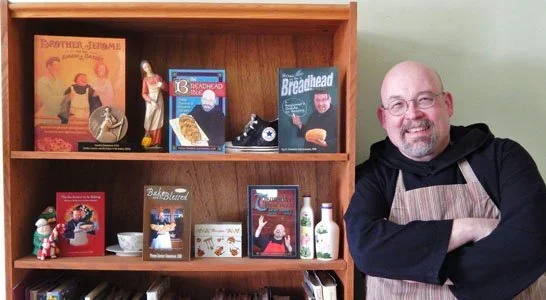
And at St. Bede Abbey, our own Father Dominic has published a series of cookbooks about working with bread and dough. With titles like The Breadhead Bible and Thursday Night Pizza, Father Dominic's writings have even led to public television appearances.
St. Bede’s services and hospitality
Sometimes, a monk’s labor produces something less tangible in the form of different services on the grounds of a monastery.
Benedictines are called to practice hospitality, welcoming guests as they would welcome Christ. For many monasteries, that means offering spaces for retreats or overnight stays. Guests receive a private or shared room, as well as meals and access to the chapel, liturgy and quiet spaces.
At our monastery in Illinois, you’ll find the Bethany House, a former boarding house transformed into a guest facility. The house includes a fully-equipped kitchen, dining area, lounges and five bedrooms with two common bathrooms. Groups of up to 25 people are invited to use the space, perhaps for a work retreat or even baby showers and birthday parties.
Notably, guests are welcomed into these spaces regardless of their ability to pay. Any suggested donations go towards food, lay staff support, building upkeep and the support of the monks.
Some monks even offer one-on-one spiritual support. Guests set appointments with a monk to discuss their spiritual direction. Again, donations are made to support the ministry. Some Benedictine communities even run addiction recovery programs, trauma retreats, services for veterans and grief programs.
Additionally, our tailor shop is St. Bede’s way of serving other monasteries as well as diocesan priests. Tailor shops have historically existed on the grounds of Benedictine monasteries but have become more of a rarity in recent years. It’s a way of filling a need among clergy, as well as giving lay tailors a chance to serve the Church.
The writings of Benedictine monks
Benedictine tradition is rooted in reading, writing and education. Early monasteries began the practice of including vast libraries as well as establishing schools and other educational ventures. Many Benedictine monasteries today still include schools, including our monastery in Illinois.
Early monks transcribed manuscripts by hand, often in writing rooms called scriptoria. While copying writings is no longer a primary task, monks are still prolific writers. Benedictine monks write books on theology, scripture, academic scholarship, biblical commentary and even poetry and cultural criticism. There are Benedictines who hold PhDs, university positions, seminary chairs and editorial roles in academic journals.
The German Benedictine monk Anselm Grün has authored roughly 300 books on spirituality, selling more than 15 million copies. Laurance Freeman, an English monk, serves as director of the World Community for Christian Meditation. He's written numerous books on spirituality and Christian meditation. St. Bede’s own bookstore includes writings from other American monks hailing from monasteries across the country.
While a small number of monasteries still practice hand bookbinding and produce limited runs of liturgical books, most Benedictine writings today are typed on computers and published through Catholic or university presses.
Understanding the work of a monk is an important part in answering the question, “how do I become a monk?” Monks’ work is just as essential as monks’ prayer. And these goods and services exist to carry on the Benedictine tradition.
As you continue to examine what monastic life could be like, consider how you will play a role in the work of St. Bede’s monks. And if you want to begin the conversation about your own spiritual journey, get in touch by submitting a form at this link.