The why and how of Benedictine communal living
For anyone trying to understand how to become a monk, the major lifestyle shifts do not go unnoticed. Communal living, especially, presents many questions and curiosities about how your life will change inside our monastery in Illinois.
Consider your current life in the secular world. You already enjoy a great amount of independence, privacy and choice. Joining other monks in the monastery moves in the opposite direction. And surely, it raises challenges as well.
But as with most aspects of monastic life, St. Bede’s communal living is a deliberate design, creating an environment that brings monks closer to God.
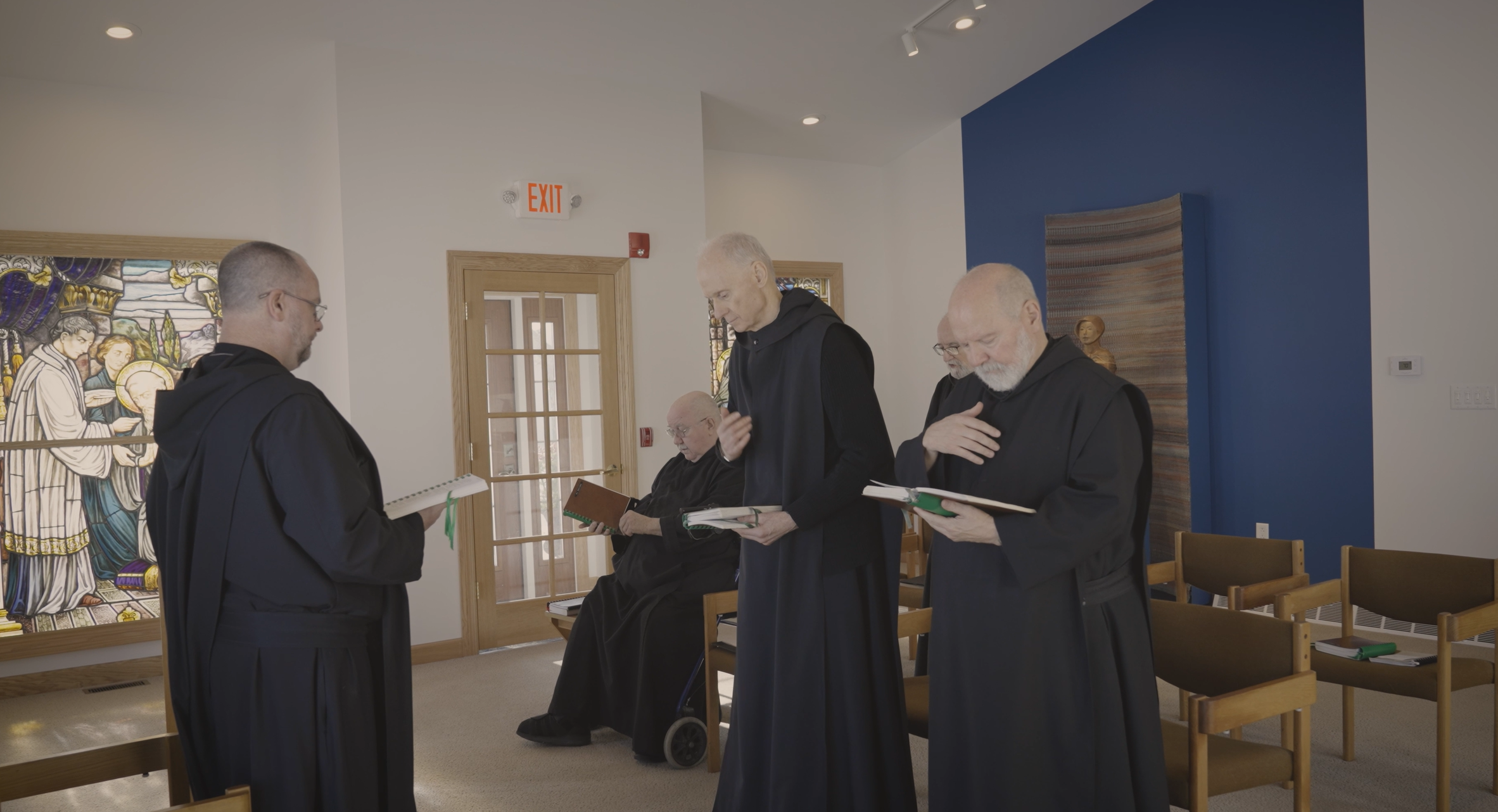
Why do monks live communally?
Let’s examine it through the lens of the three Benedictine monastic vows: stability (stabilitas loci), obedience (oboedientia) and conversion of life (conversatio morum).
You can learn more about the Benedictine vows here.
For a Benedictine monk, stability forces routine—while rejecting novelty. It’s in these moments of routine that monks are called to find God in the ordinary, cultivating an inner stillness and peace.
Stability often refers to remaining in the same monastery and adhering to regular routines. And that naturally informs communal living among the same group of monks. Living together in community creates a shared orientation in a monk’s search for God.
In a monastery like St. Bede’s, the second vow of obedience takes a few shapes. It refers to the obedience monks show towards the abbot, scripture, The Rule and the will of God. It’s an act of freeing oneself from self-will, inviting monks to reorient themselves around God, together.
The third monastic vow, conversatio morem, is an ongoing process of spiritual growth and orientation towards holiness. It commonly shows up in the discipline and routines of Benedictine monks. And in asking the question “how do I become a monk,” it reminds us that the process is continuous, even after taking our vows.
But communal living also plays an essential role in this vow.
For a monk, spiritual growth doesn’t happen in isolation. By living among other monks at St. Bede’s, we are able to reveal our own blind spots, test our patience and, in turn, refine love.
You can learn more about conversatio morem here.
Essentially, communal living allows for a mindset shift, from the individual and achievement to belonging and participation. When you are no longer the center of your life, you make space for God and for others to come into focus.
What does communal living look like for a Benedictine monk?
Communal living naturally overlaps with other aspects of monastic life at our monastery in Illinois. The monks’ prayer and work dictate the rhythms of the day. And that’s a routine that all monks share in.
The common work and responsibilities means everyone contributes, and no one exists purely to consume. The smallest, repetitive tasks become part of the communal fabric.
You can learn more about how St. Bede’s monks approach work here.
Similarly, the monks live under the authority of an abbot. But it’s important to note that this leadership isn’t about control for its own sake. Instead, the relationship is built on mutual respect and understanding. In that regard, the abbot, too, must navigate the same realities of communal living as his fellow monks.
You can learn more about life under a Benedictine abbot here.
The reality of communal living
Monks are all human. And living together in close proximity with others who are not your family brings many challenges. You’ll be called to wait on others and exercise patience. And there will be a mix of personalities that you will learn to adapt to.
So communal living is not always a constant harmony or deep friendship with everyone. Nor is it the absolute loss of individuality. It’s merely a reordering. And it doesn’t mean an escape from difficulty. That challenge and friction is often intensified.
Don’t mistake this friction for flaws in how communal life is designed. It is, in fact, essential to following the model of Christ. Small grievances can happen regularly. So, forgiveness becomes a daily practice. Just as with other realities of the Benedictine life, living in community calls you to a different mindset where you learn to let go of being right or first or preferred. That shift is a challenge that encourages you to rely on God’s grace, offered to you through your vow of stability. It is a call to be faithful to your vocation, especially when the way becomes difficult.
Perhaps most importantly, it’s the shared experience of seeking God that allows for communal living to endure. This spiritual aim is the common purpose that bonds the monks, even in the face of challenges.
Over time, a monk learns to react less and listen more. They come to understand that they are less central to their own story. As you become a monk, you will discover that the community shapes you in ways you might not choose. But these can be the ways that you ultimately want to be transformed.
In essence the goal of communal living isn’t about finding “your people.” Instead, you slowly become the right kind of person among them.
If you see yourself as a part of our community at our monastery in Illinois—or just want to learn more about how to become a monk—please reach out by submitting a form at this link.