Aging in the monastery: what the Benedictines teach us about growing old
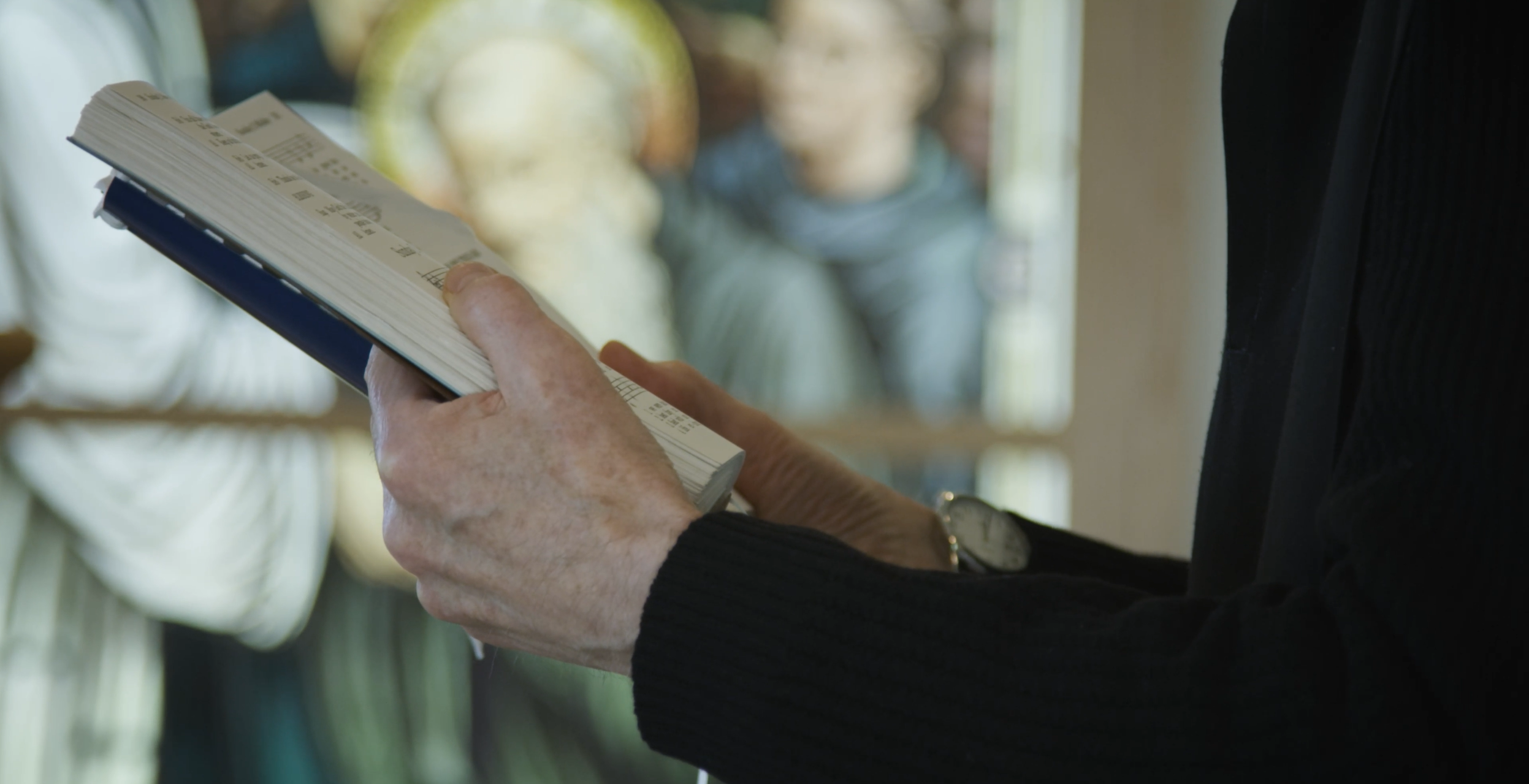
The first Benedictine vow—stability—informs almost every aspect of monastic life. Stability calls monks to remain in his monastery for decades. A monk must live within the same community, surrounding himself with the same group of monks, despite any challenges. And at its deepest level, stability creates the routines that cultivate spiritual growth, like the adherence to monks’ prayers.
Read more about the other Benedictine vows here.
But stability also raises an important question: if a monk must follow this vow for his entire life, what happens to a monk as he ages? A monk’s day is dictated by routine and rhythm, inside a community where everyone is asked to play a part.
Certainly, with age comes many changes to his abilities. And those changes reveal a great deal about Benedictine living. So sometimes, an important part in understanding how to become a monk requires us to look decades into that monks’ future.
St. Benedict on aging
The Rule of St. Benedict explicitly discusses aging monks, acknowledging special considerations are to be made. That may include dietary changes at mealtime or adaptations to physical demands. In certain cases, older monks may receive more individual accommodations or special attention. St. Benedict writes in Chapter 37:
Let their weakness always be taken into account, and let them not be held to any of the Rule’s rigor with regard to food. Rather, let them have the consideration of love, and let them come before the regular hours.
St. Benedict offers a practical approach, understanding that equality does not necessarily mean treating everyone the same.
Just as monks’ prayer and work aren’t optimized for efficiency every single day, aging isn’t treated as a burden or a problem to solve. Instead, it’s another opportunity to allow oneself to be transformed by God.
The role of elderly monks
As a monk ages, their responsibilities and activities evolve within the monastery. In our monastery in Illinois, a younger monk may be expected to perform manual tasks like farming or working in the kitchen. Or his responsibilities lie in welcoming guests, teaching, and handling finances.
At a certain point, an older monk may no longer be able to perform the tasks he had been assigned for years or even decades.
It’s common for older monks to become the de facto torchbearers for the St. Bede’s history. With decades of monastic life, he's the one who remembers former abbots or major decisions and milestones. He carries stories that were never written down, yet still hold powerful insights for the other monks.
The elderly monks are testaments to the vow of stability. They’ve committed to St. Bede’s community and its monks for years. And the other monks can learn so much from watching them navigate this new chapter.
The spiritual practice of caring for the aging—and depending on others
In a community designed around mutual dependence like St. Bede’s, aging may be the ultimate example of serving others and learning to be served.
As an elderly monk requires assistance with mobility, medical care or daily tasks, he learns a new form of obedience and trust within the community. It’s another chance to practice humility. Likewise, a younger monk is given further responsibility to care for those in his community.
Of course, this transition also anticipates death within a uniquely Benedictine perspective. The community bears witness to illness and share in it together. And a monk’s final years are spent dependent on the same community he has spent his everyday life with.
You can learn more about community life within our monastery in Illinois here.
If you’re asking yourself “how do I become a monk,” it’s essential to go beyond just the discernment process and day-to-day of the monastery. It’s about understanding what lies ahead and how monastic life can truly transform you.
To learn more about what awaits you at our monastery in Illinois, please reach out by submitting a form at this link.