Sunday in the monastery: How Benedictines approach the Lord’s Day
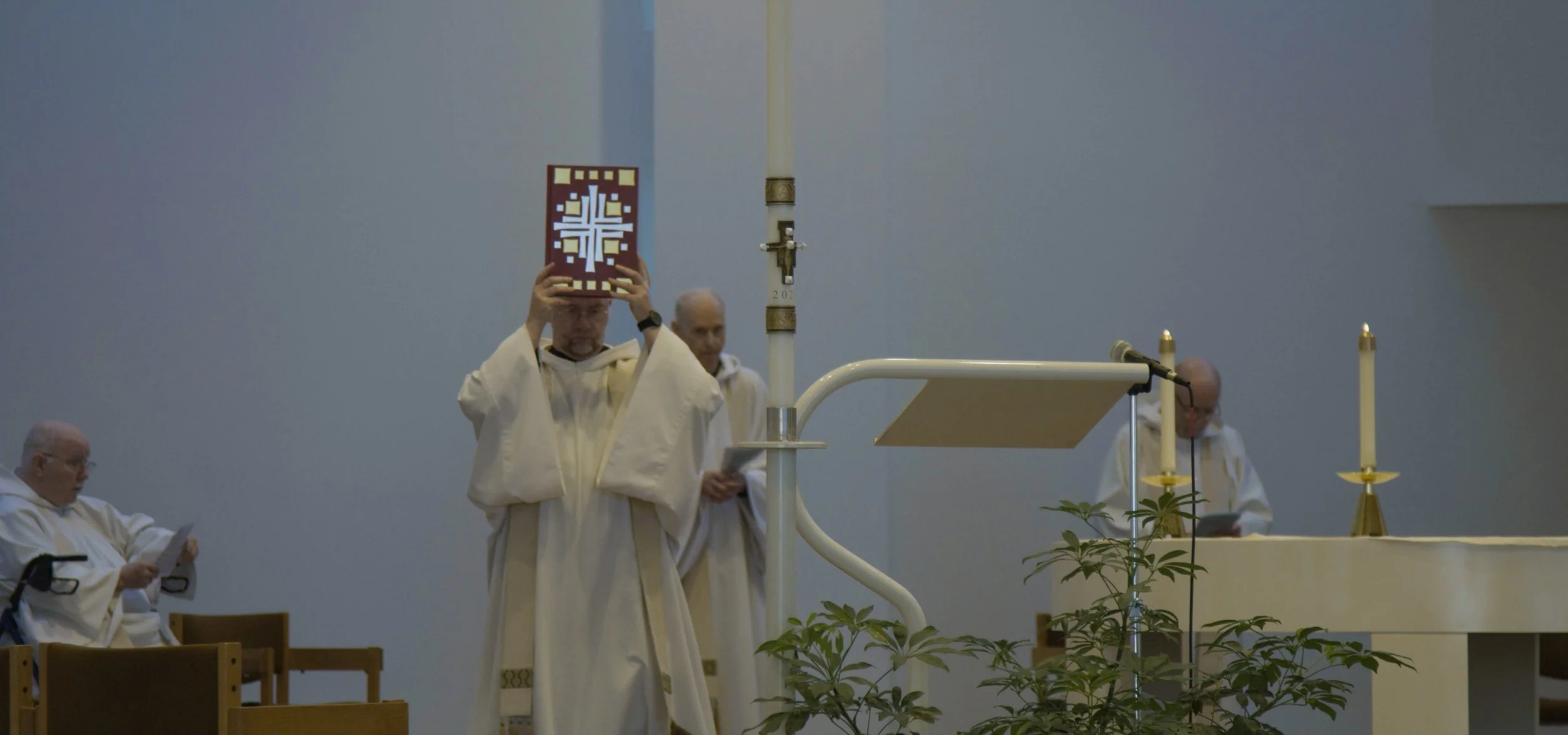
To an outsider, every day at our monastery in Illinois might feel like a holy day. Schedules are dictated by monks’ prayer and worship. Mass is even celebrated daily.
But that begs the question: when every day is holy, what happens on Sunday?
It’s true that Sunday looks a little different from the other days of the week. For all Christians, Sunday is “the little Easter,” a weekly celebration of Christ’s resurrection. The word “celebration” is key here. It is joyful and hopeful—a symbol of Christ’s return.
At St. Bede’s monastery and beyond, Sunday still holds that prominence. Informed by other Benedictine practices and teachings, however, it is a richer opportunity to worship and celebrate the Lord.
Monks’ prayer, Mass and the Liturgy of the Hours
The Liturgy of the Hours is the cornerstone of Benedictine daily prayer, informing when and how monks pray. And Sunday is no exception. The selected prayers or readings may be more solemn or expansive. Psalms and hymns may emphasize the resurrection, joy and praise for the Lord.
Likewise, Sunday’s Eucharist—the high point of any Mass—is treated with greater solemnity.
You can learn more about Benedictine monks’ prayer here.
What about work?
The structured days in the monastery inform when and how Benedictines work. And that structure means that there are no “days off” or weekends as we might normally think of them. The standard schedule continues even on Saturday.
Still, labor is greatly reduced. Farming, office work or routine projects may be scaled back greatly or completely put on hold for the day.
The Rule of St. Benedict doesn’t explicitly lay out what Sunday should look like. But it is understood that the shape and timing of work is secondary to worship. So, on Sunday, that worship comes even more into focus.
That said, there is still some necessary work within the monastery, especially when it comes to supporting the community. Responsibilities like cooking, caring for elderly monks or tending to any animals must continue. Think of it as continuing only the essential tasks that best serve the holiness of the day.
You can learn more about the Benedictine approach to work here.
What goes into a Benedictine day of rest
Sunday is, of course, a day of rest. For many in the secular world, the default way of unwinding is through entertainment. But for Benedictine monks, rest takes a particular posture.
With work no longer a priority, Sunday allows monks to shift their focus from productivity to receptiveness. They may spend more time—and more attention—reading scripture. Or they may take longer walks along St. Bede’s grounds. Sunday is also a time for enjoying the beauty of creation, as well as personal reflection.
It’s also a chance for the monks to come together and enrich their relationships to one another. With obligations during the week, the Benedictine monks finally have a chance to simply be together. They can take longer meals, even if talking is sparse. There are more moments for relaxed conversation or even recreation. Sundays are also an opportunity to welcome guests to our monastery in Illinois.
You can learn more about Benedictine communal life here.
Celebrating Holy Days of Obligation
Of course, Sunday is not the only required day of prayer of worship within the Church. Holy Days of Obligation—from Lent and Christmas to feast days—also call Catholics to Mass. Like on Sundays, Benedictine monks may adopt a richer liturgy, with additional chants or hymns.
One aspect that sets these days apart is the fact that Benedictines will often celebrate with food. A more festive meal or dessert is common. Wherever customary, the monks may enjoy wine or beer. And yes, some monasteries do decorate.
You can learn more about the importance of meals in monasteries like St. Bede’s here.
By centering every day around prayer and worship, Sundays don’t become any less holy. Instead, it’s a chance to reorient oneself around the most essential parts of Benedictine monastic life. As you explore how to become a monk, you’ll discover just how these teachings inform every aspect of your time in the monastery.
And if you’re ready to take the next step in that journey with St. Bede’s community, please reach out by submitting a form at this link.